Bob Haircuts for Women Over 70: 15 Flattering Styles to Try
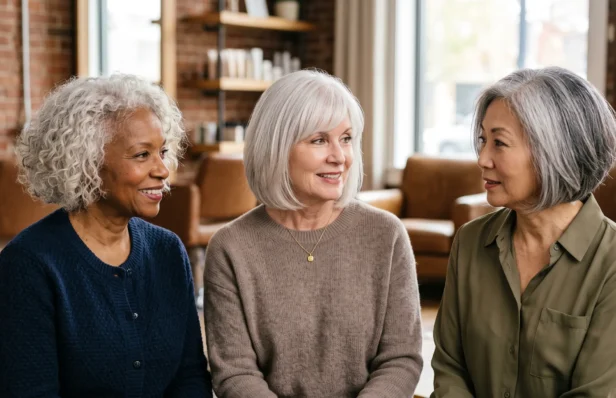
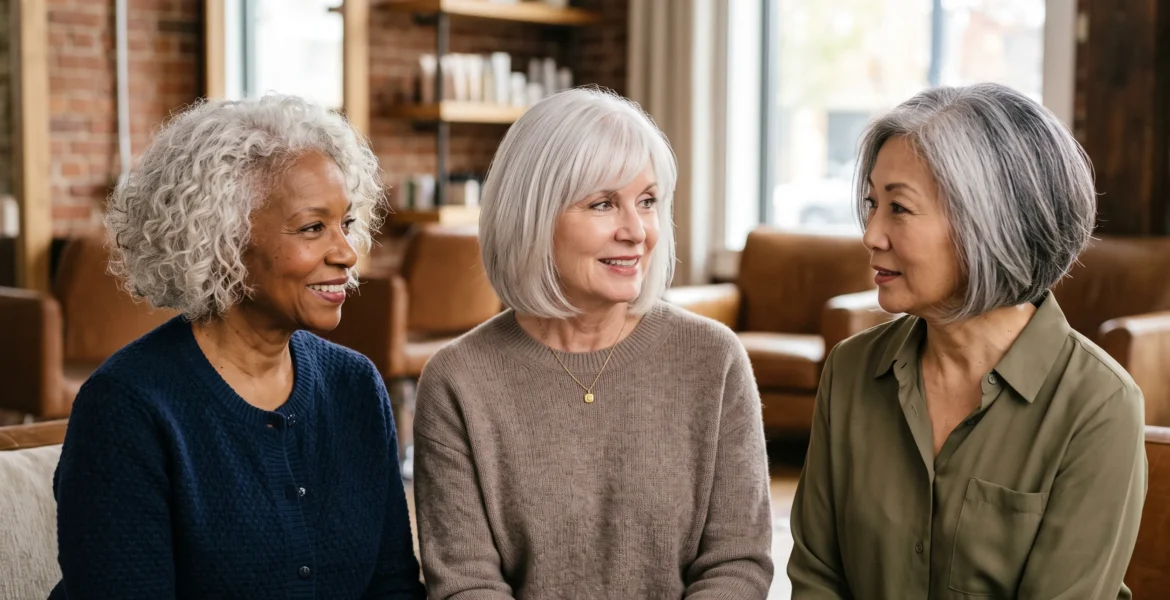
A bob is one of the smartest cuts a bob haircuts for women over 70. It’s short enough to feel effortless, long enough to still be styled a dozen different ways, and structured enough to frame the face beautifully as skin and features change with age. Whether your hair is silver, white, or still holds some of its original color, a well-cut bob can look polished with almost no daily effort.
Below, we’ll cover how to choose and care for a bob in your 70s, then walk through fifteen versions of the cut — from sleek and precise to soft and wavy — so you can find the one that matches your hair texture, your face shape, and how much time you actually want to spend on styling.
Part of why the bob endures as a go-to cut later in life comes down to proportion. As hair thins and loses some of its natural density, longer styles can start to look stringy or sparse, especially toward the ends. A bob solves that by ending the hair at a point where it still has weight and shape, which naturally reads as fuller and healthier. It also sits at a length that tends to be easier to manage in the shower, under a hood dryer, or on a windy day, without sacrificing the sense that you’ve made a deliberate style choice rather than just “gone short.”
Another reason this cut works so well is its flexibility. A bob can be sharp and geometric for someone who wants a bold, modern look, or soft and rounded for someone who prefers something gentler and more classic. It can be worn poker-straight, loosely waved, or textured and undone, and it adapts easily to gray, silver, white, or still-color-treated hair. That range means you’re not locked into one particular aesthetic just because you’ve chosen a shorter length.
Discover more timeless styles in these elegant bob haircuts for women over 50.
How to Choose and Care for a Bob After 70
A bob works well at any age, but a few small adjustments make it look sharper and last longer once hair starts to thin or change texture.
Get it cut by a professional, especially the first time. A bob lives or dies by its precision. Even a millimeter of unevenness is noticeable at this length, so it’s worth booking a stylist rather than trimming it yourself, at least until you’ve settled on a shape you love.
Switch to products made for fine or fragile hair. Hair naturally loses density with age, and a bob shows that thinning more than longer styles do. A volumizing shampoo and conditioner can help hair look fuller without weighing it down.
Don’t overwash. Washing too frequently strips natural oils and leaves already-fragile strands more prone to breakage. Most people do fine washing every two to four days, adjusting based on how oily or dry their scalp tends to run.
Keep dry shampoo on hand. A light dusting between washes adds texture and lift, which is especially useful for fine hair that tends to fall flat.
Deep-condition weekly. Swapping your regular conditioner for a richer mask once or twice a month helps repair damage and keeps ends from looking wispy or dry.
Address thinning proactively. Noticeable shedding is common with age, and a bob is genuinely good at disguising it — but it also helps to bring in a scalp serum or a doctor-recommended treatment if you’re seeing more hair than usual on your brush or pillow. For science-backed guidance on this, the American Academy of Dermatology publishes practical, dermatologist-reviewed advice on caring for thinning or fragile hair, which is worth a read if you want recommendations straight from board-certified experts.
Protect your ends. A soft-bristle brush that won’t snag or tug is gentler on aging hair, and a heat protectant is non-negotiable any time you reach for a blow dryer, flat iron, or curling wand. Minimizing heat styling altogether will keep a bob looking healthiest for longest.
Shield hair from the sun. UV exposure fades color and dries out strands just as it does skin, so a leave-in spray with SPF is a smart addition if you spend a lot of time outdoors.
Bob Haircuts for Women Over 70
Here are fifteen ways to wear a bob past 70, ranging from crisp and structured to loose and textured. Bring a photo or two to your stylist as a starting point — they can adjust the exact length and layering to suit your hair’s natural texture and how your face is shaped.
1. The Sharp Silver Bob
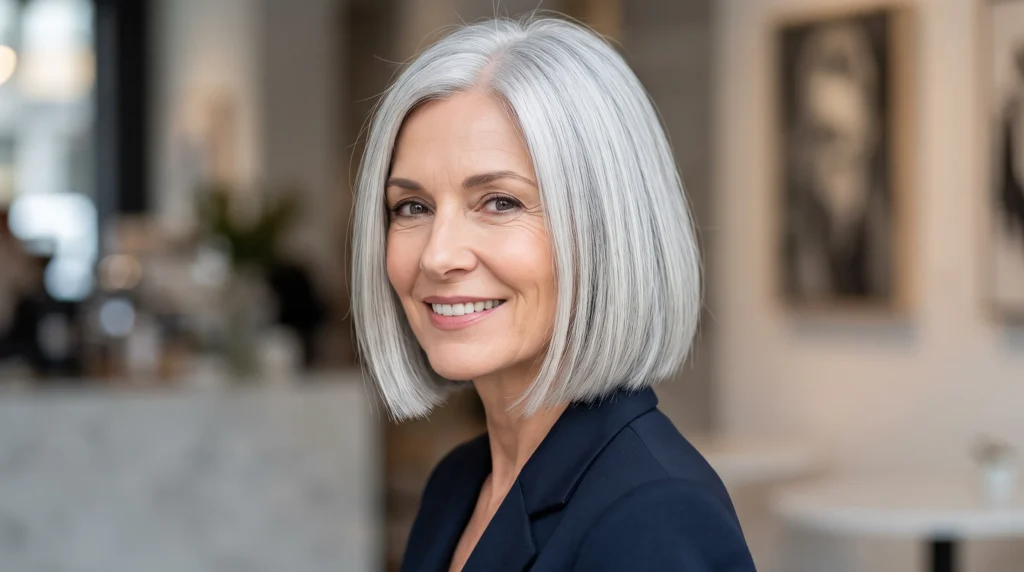
A blunt, jaw-length cut with almost no layering reads as clean and confident. There’s no blending or feathering to soften the line, which is exactly the point — the crisp edge is the style. Paired with a natural silver or gray shade, it has a polished, no-nonsense quality that photographs beautifully and requires only a quick blow-dry to maintain its shape. Because there’s minimal layering, this cut also tends to hold up well between salon visits, growing out evenly rather than losing its shape after a few weeks.
2. Feathered Layers for Natural Lift

Light, feathered layering through the ends gives volume without any real styling effort. This version works especially well for hair that tends to sit flat, since the feathering creates movement around the cheeks and jaw. A blow-dry with a small round brush, focused mainly at the roots, is usually all it takes to bring out the lift built into the cut. It’s a strong choice if you want a bob that looks intentional on a busy morning with minimal product.
3. Full Fringe, Soft Curve
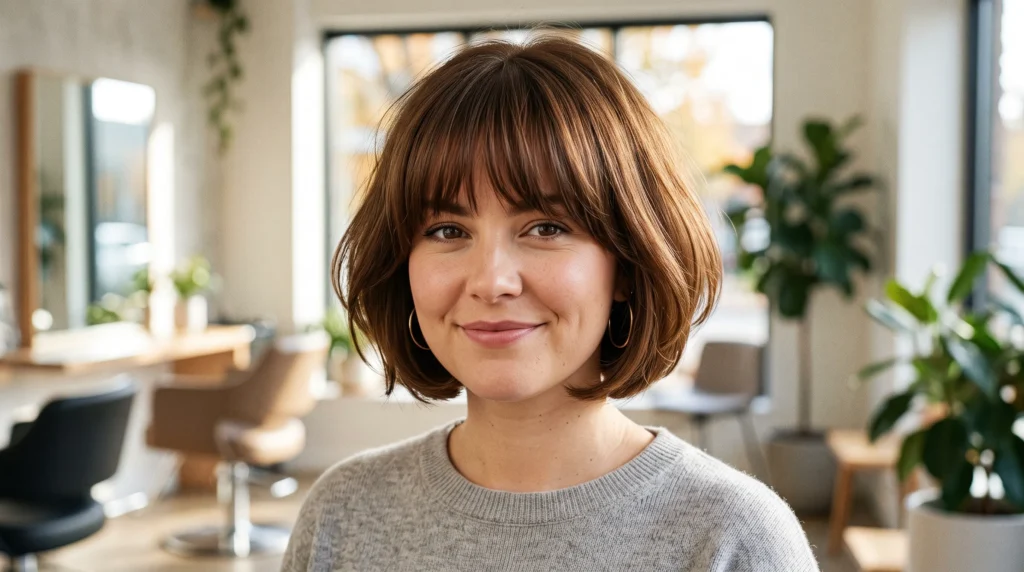
A rounded bob paired with a full, softly blended fringe is one of the most face-softening combinations out there. It draws the eye up and outward, which is a simple way to balance out fuller lower cheeks or a more prominent jawline. The fringe should blend seamlessly into the sides rather than sitting as a separate piece, so it’s worth asking your stylist to feather the edges rather than cutting a hard, straight line. This look tends to skew slightly younger and more playful while still being easy to maintain.
4. Tousled, Undone Texture

For a more relaxed, lived-in look, ask for a bob with textured, slightly choppy ends. A texturizing cream worked through damp hair enhances the natural separation and keeps the style from looking too “done.” This version is forgiving of second- or third-day hair, since a bit of natural texture actually works in its favor rather than against it, making it one of the lowest-maintenance options on this list.
5. The Classic Graduated Bob
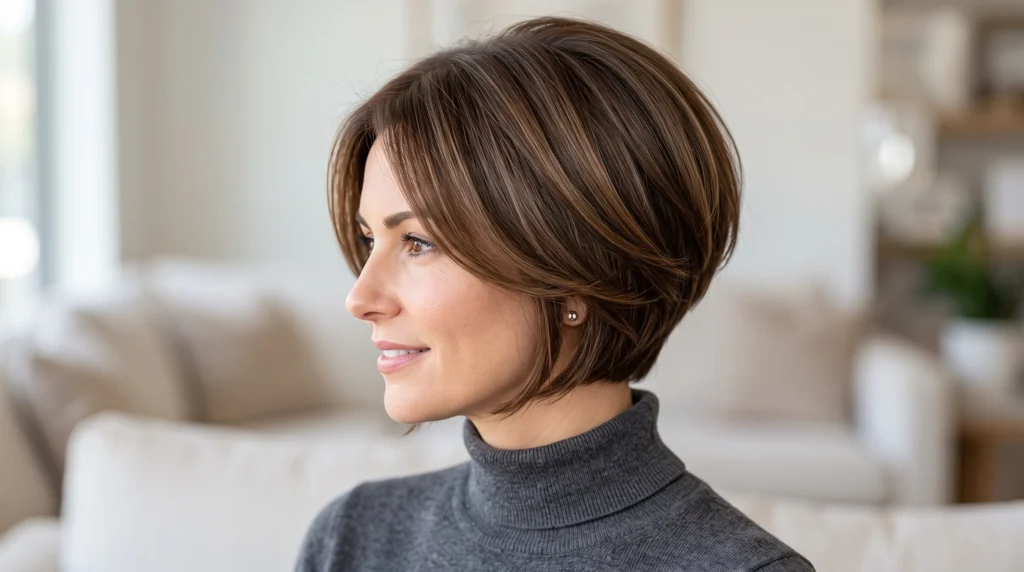
This shape tapers gradually from the back of the head toward the front, giving structure at the crown while keeping the face-framing pieces soft. It’s a dependable, universally flattering option for fine or fragile hair, since the graduation naturally builds in shape and body at the back without requiring heavy layering elsewhere. It’s often the cut stylists recommend as a starting point for anyone new to short hair, because it’s easy to adjust in either direction at future appointments.
6. Voluminous Bob with a Deep Side Part
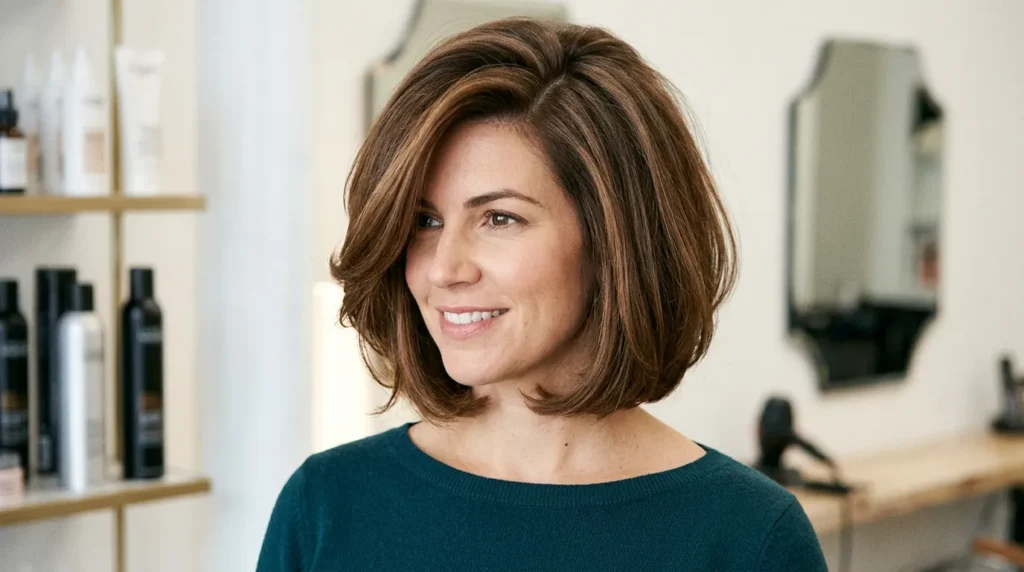
Shifting the part to one side instantly adds the illusion of volume and creates gentle asymmetry, which helps balance uneven features. A round brush used while blow-drying brings out the fullest version of this shape, lifting the roots on the heavier side of the part. This is a particularly good option if your hair has thinned unevenly, since the deeper part naturally camouflages areas with less density.
7. Sleek and Glossy with Minimal Movement
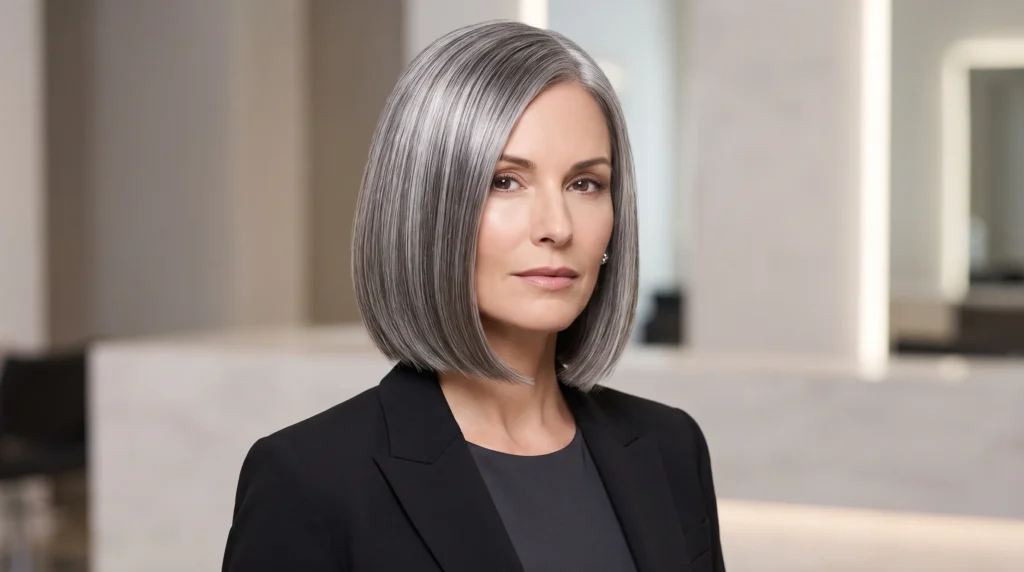
Barely-there layering keeps this bob smooth and close to the head, giving it a neat, glass-like finish. A shine serum applied to dry hair enhances the glossy effect, especially on gray or silver shades, where extra shine can make the color look richer and more intentional rather than dull. This style leans more formal and put-together, making it a good pick if you want a bob that reads as polished for both everyday wear and dressier occasions.
8. Slightly Swingy Layered Bob
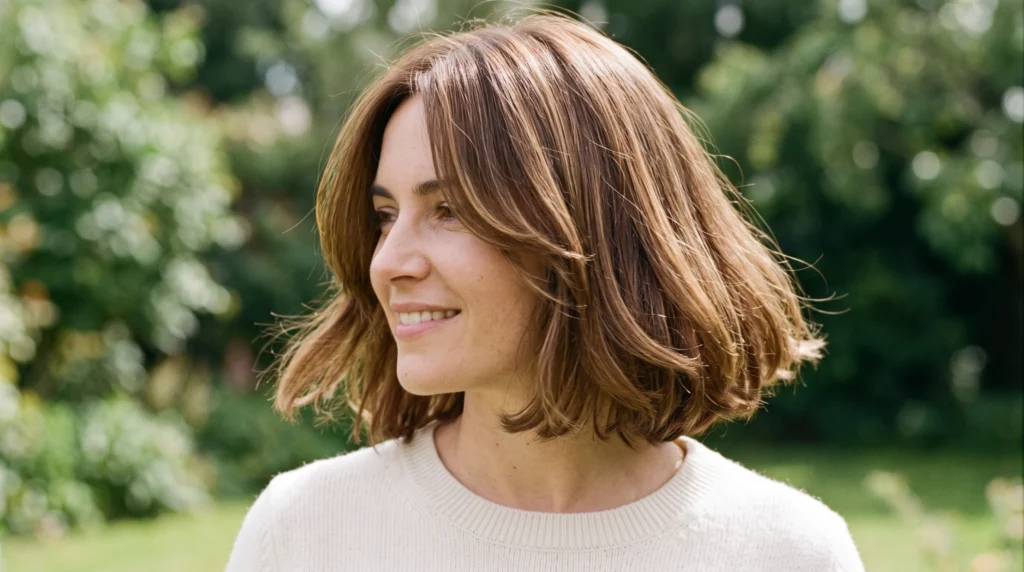
A touch of layering at the ends creates gentle movement without looking overstyled. Face-framing pieces soften the jawline, making this a good middle-ground option between a strict blunt cut and a heavily layered one. It moves naturally when you turn your head, which gives the whole style a lighter, more youthful energy without requiring daily curling or styling.
9. Wavy, Dimensional Bob
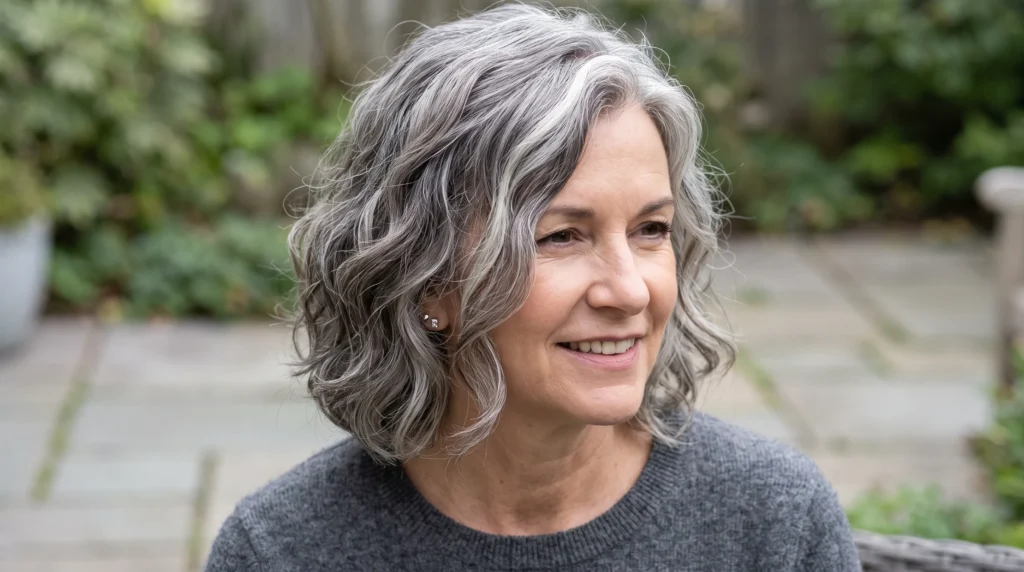
If your hair has natural wave, let it do the work. A few loose curls set with a diffuser and a light mousse give this bob a soft, textured finish with real depth, especially on multi-tonal gray hair, where the waves catch and reflect different tones. This style is a good option for anyone who wants to work with their hair’s natural pattern instead of fighting it with a flat iron every day.
10. Airy Bob with Wispy Ends
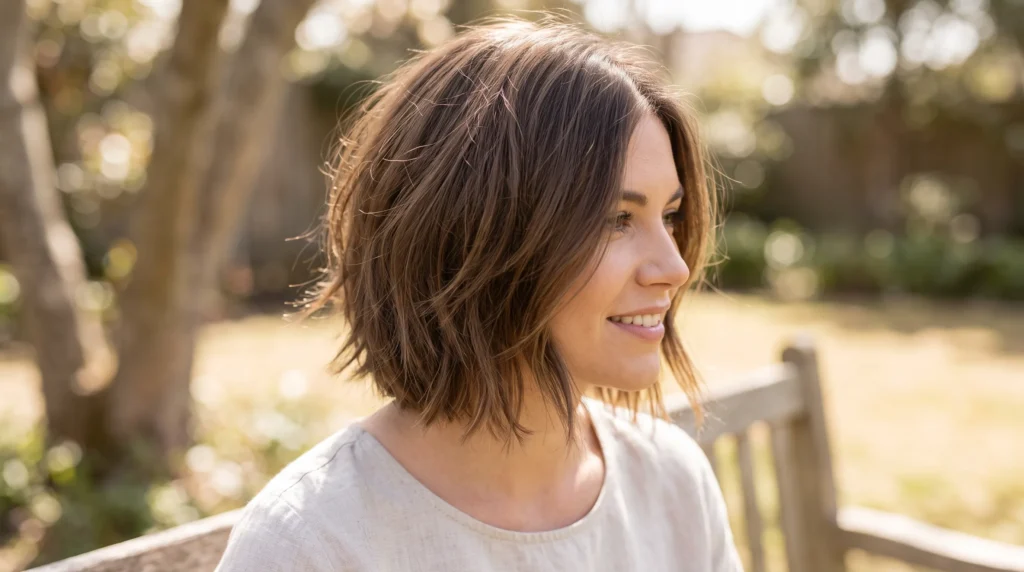
Thin, feathered layering throughout keeps this cut light and breathable rather than bulky. It’s a good pick if you want shape and body but don’t want a style that needs much daily maintenance, since the wispy ends already carry their own texture and don’t rely on precise styling to look finished. It also tends to be a comfortable option in warmer climates, since the layering keeps hair from feeling heavy.
11. Stacked Bob for Extra Fullness
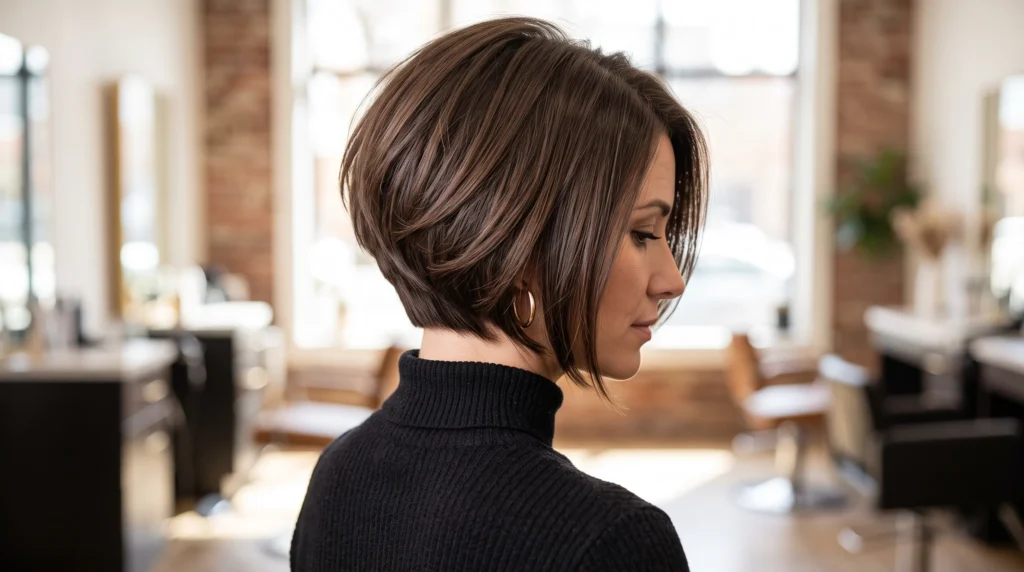
Stacking — where the back is cut with more layers than the front — builds fullness low at the nape while keeping the crown smooth. It’s particularly good for creating the appearance of thicker hair from the side profile, which is often where thinning is most noticeable. This shape holds its structure well and is a favorite among stylists for clients who want visible body without a lot of daily effort.
12. Wavy Bob with Long Side Bangs
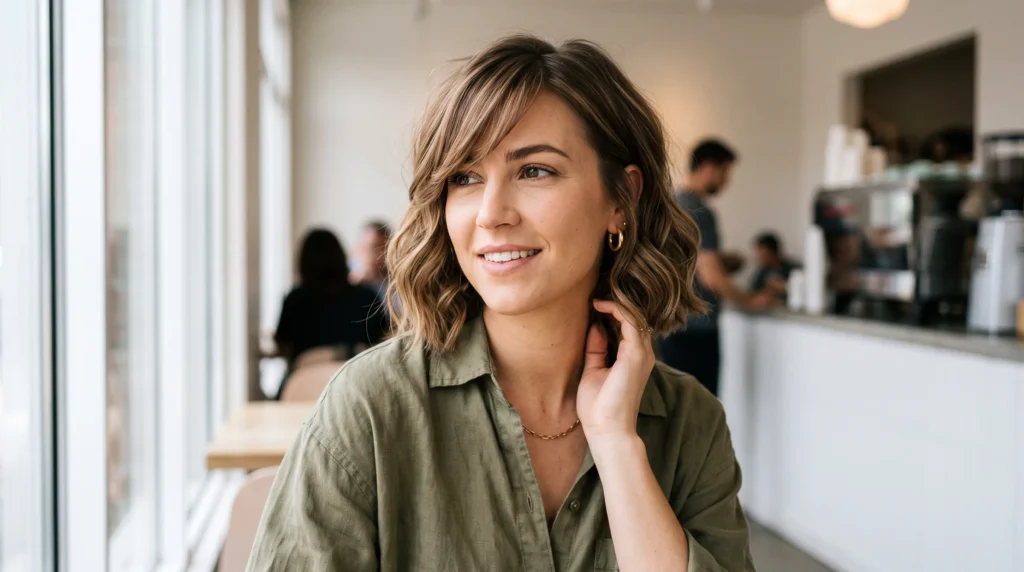
Soft waves combined with longer, side-swept bangs give this bob a playful, modern edge. A large-barrel curling iron creates loose, effortless-looking texture without requiring much technical skill to recreate at home, making it a realistic option even if you don’t consider yourself especially skilled with hot tools. The longer bangs also offer some flexibility, since they can be pinned back or worn forward depending on the day.
13. Warm-Toned Precision Bob
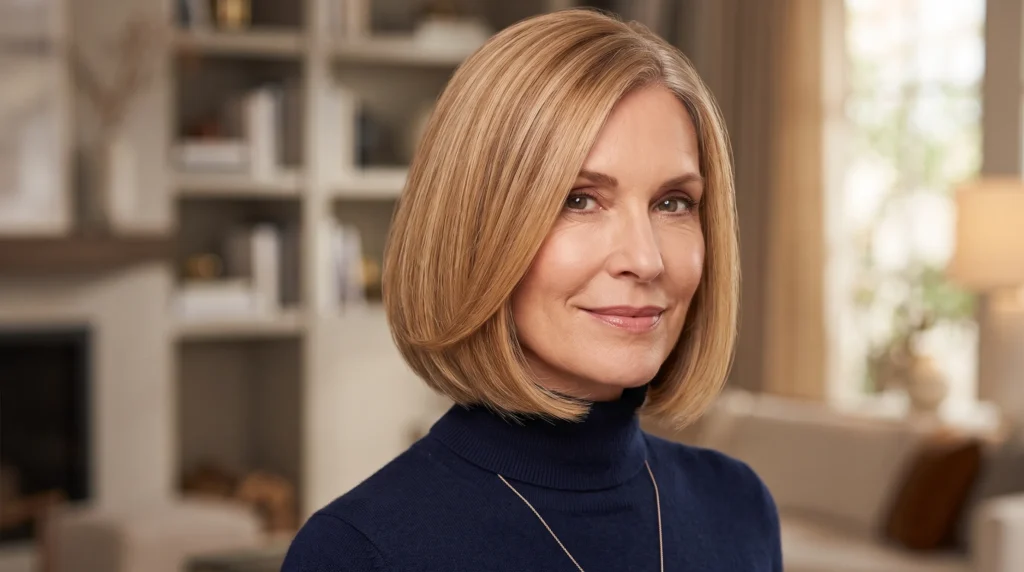
A slight inward curve at the chin softens the jawline, and a warm beige or golden tone adds brightness near the face. This is a particularly good option if you’re transitioning to gray and want a shade that eases the process, since warm blonde tones tend to blend more gradually with emerging silver than cooler colors do. The precise, curved shape also gives the cut a refined, tailored look.
14. Rooted Silver Bob
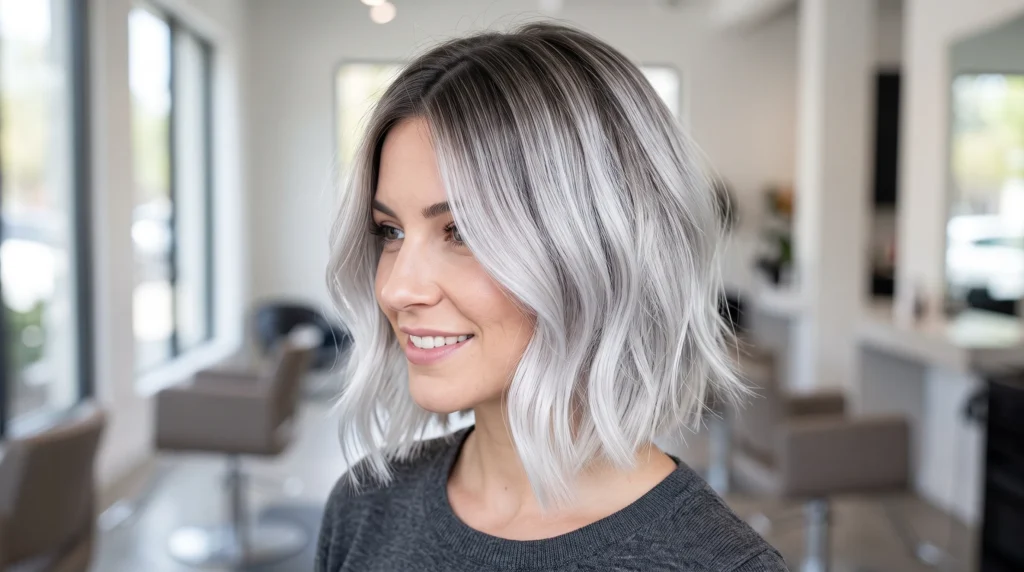
A seamless blend from a slightly deeper root into lighter, icier ends gives this bob real dimension. A clear gloss treatment can enhance the shine and keep the color looking fresh between salon visits, and the rooted approach also means regrowth is far less noticeable than it would be with an all-over single-process color. That makes this a practical choice for anyone who’d rather not be back in the salon chair every few weeks.
15. Multi-Tonal Gray Bob
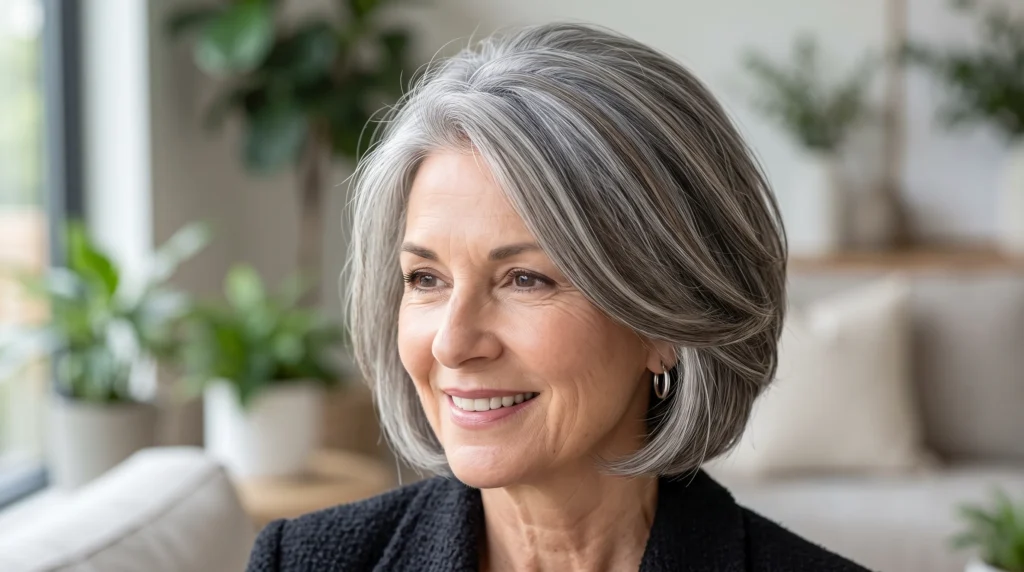
Rather than one flat shade of gray, this style weaves in subtle cooler and warmer strands for a richer, more dimensional finish. The rounded shape flatters nearly every face and adds welcome body to fine, agiang hair, while the varied tones catch the light in a way that a single, uniform gray often can’t. It’s one of the more advanced color techniques on this list, so it’s worth seeking out a colorist who has specific experience working with gray and silver hair.
Frequently Asked Questions
How often should a bob be trimmed after 70? Most bobs hold their shape best with a trim every six to eight weeks. Because the cut relies on a precise line, it grows out more noticeably than longer styles, so staying on a regular schedule keeps the silhouette looking sharp rather than shaggy.
Is a bob a good option for very fine or thinning hair? Yes — in most cases, a bob is one of the better choices for fine or thinning hair. Ending the hair at a shorter length keeps it from being weighed down by its own length, which naturally makes it look fuller. Adding light layering or a stacked back section can boost that effect even further.
Can a bob still be worn with long-term color treatments? Absolutely. Whether you keep a warm blonde, work with your natural gray, or blend the two with a rooted technique, a bob adapts well to almost any color approach. The main consideration is maintenance: lower-maintenance color techniques, like rooted or multi-tonal gray, tend to pair especially well with a wash-and-go lifestyle.
What’s the easiest bob style to maintain day to day? Textured, tousled bobs and airy, wispy-layered bobs tend to require the least daily effort, since they’re designed to look intentionally undone. A quick scrunch of texturizing cream or a light mist of dry shampoo is often enough to refresh them between wash days.
Final Thoughts
A bob is proof that short hair doesn’t have to mean simple hair. From sleek, structured cuts to soft, wavy ones, there’s a version of this style for every texture, face shape, and comfort level with daily styling. The real key is finding a stylist who understands how to cut for your hair’s current density and texture — and building a gentle, consistent care routine around it so the shape holds up beautifully between appointments. Bring reference photos, be honest about how much time you’re willing to spend styling, and don’t be afraid to revisit the shape at your next appointment if it needs small tweaks. A bob is meant to evolve with you, not lock you into one look forever.